Specialist Disability Accommodation
What is Specialist Disability Accommodation (SDA)?
SDA is NDIS funding for the home itself. It pays for specialist homes built for people with extreme functional impairment or very high support needs. It does not pay for the support workers.
- Funding for the home, not for the support
- Purpose built, accessible apartments
- Available in selected villages
- Registered NDIS provider, registration 4050149586
In plain language
SDA in plain language
SDA stands for Specialist Disability Accommodation. It is funding for a home that is built or fitted out for people with very high support needs.
SDA pays for the property, not for the people who support you. Support is funded separately, usually through Supported Independent Living.
Only some people have SDA in their plan. It is for people with extreme functional impairment or very high support needs, where an ordinary home will not work.
What is funded depends on each person's own NDIS plan. We cannot decide or promise funding, and we will not tell you it is sorted when it is not. Call us and we will talk it through with you.
The funding
How SDA funding works
SDA is a separate item in an NDIS plan, paid to the SDA provider for the home. You still pay rent for your home, as you would anywhere, and we set that out in writing before you decide anything.
The building itself
A home designed and built for high support needs, not a standard rental adapted afterwards.
Accessible design
Step free access, wider doorways, accessible bathrooms and space to move safely.
Assistive technology in the home
Fixed items such as ceiling hoists, height adjustable benches and assisted opening doors, where the design includes them.
Design categories
SDA is funded by category, such as improved liveability, fully accessible, robust and high physical support. Your plan names the category you are funded for.
Maintenance of the home
The SDA provider looks after the building, so the home stays safe and works for you.
A tenancy of your own
You have an agreement for your own home, with the rights that come with it.
What it does not cover. SDA does not pay for support workers, daily tasks or personal care. That support is funded separately, usually as Supported Independent Living. SDA also does not cover your rent contribution or everyday living costs.
Our model
How SDA works in a Vertical Village
In selected villages, the apartment is the SDA and SIL support is delivered on site in the village, rostered to each member's own plan. SDA apartments are available in selected villages, not in every village. Our shared home on Main Road in Noraville, on the Central Coast, is also SDA high physical support. Ask us where an SDA home is available now.
Your apartment is the SDA
A self contained, purpose built apartment, not a bedroom in a shared house.
Your own front door
You come and go, you have visitors, and you decide who comes in.
Support on site
SIL support workers are based in the village, so help is close by, rostered to your own plan.
Built for high support needs
Accessible layouts and fixed assistive technology, matched to the design category you are funded for.
A village community
Neighbours and shared spaces, so a high support home does not mean a small world.
Selected villages
Not every village has SDA apartments. Ask us which ones do and what is available now.
What it looks like
Apartments, shared spaces and neighbours
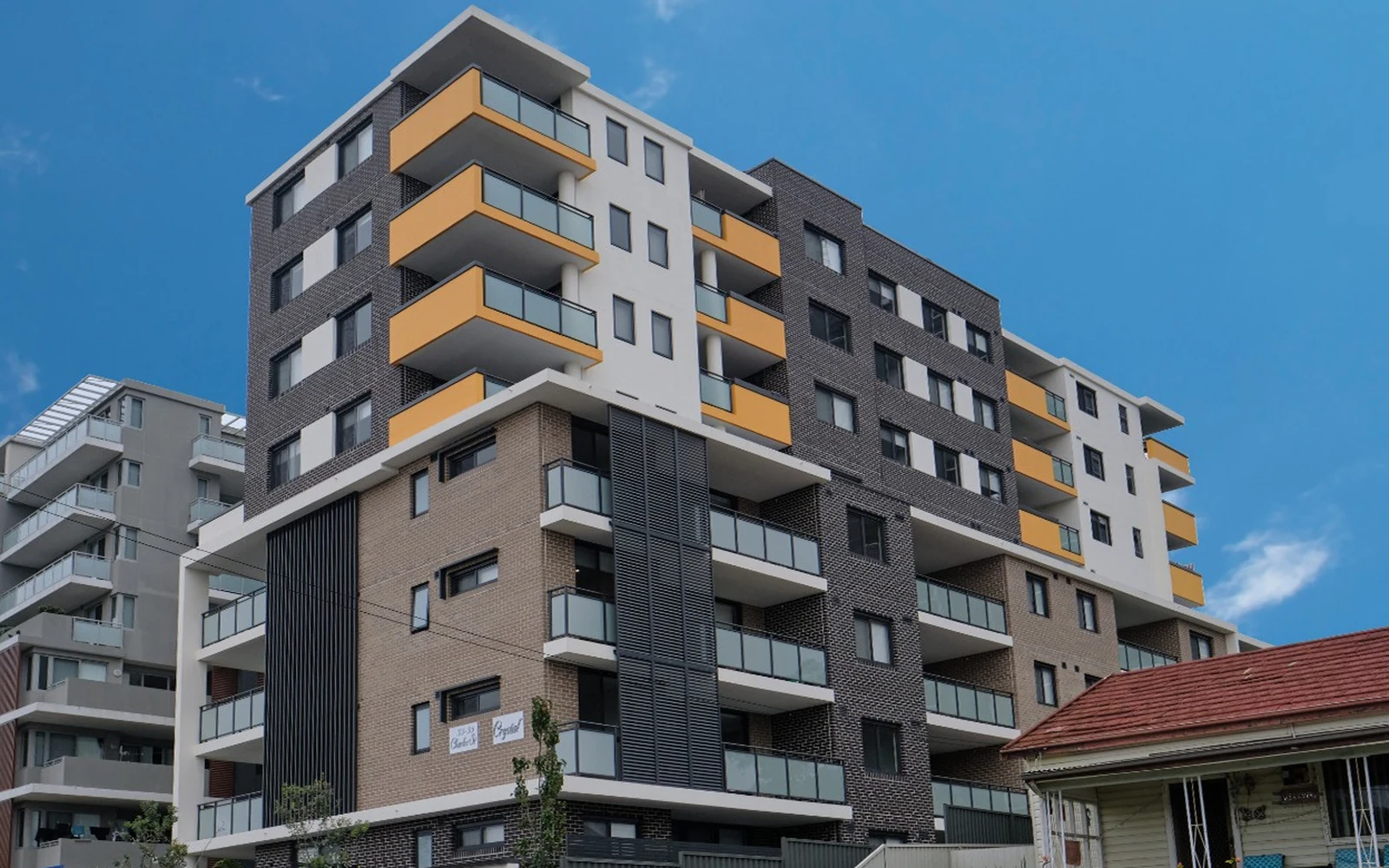
Photography from our villages, showing the apartments and the everyday life around them.
The difference
How this differs from a group home
A lot of specialist accommodation still looks like a shared house with staff. A Vertical Village apartment is your own home, in a community.
| A Vertical Village apartment | A traditional group home | |
|---|---|---|
| Your home | Your own purpose built apartment with your own front door. | A bedroom in a shared, staffed house. |
| Who you live with | You live on your own or with who you choose. | Housemates matched by whoever needed a bed. |
| How support runs | Your own roster of care, delivered by workers based in the village. | One roster for the whole house. |
| Design | Apartments designed for accessibility and high support from the start. | A house adapted after it was built. |
| Community | A village of neighbours, with shared spaces and things to join in with. | The household you were placed with. |
SIL and SDA
How SIL and SDA fit together
They are two separate parts of an NDIS plan. SIL pays for the support you receive. SDA pays for the home you live in. A person can have SIL without SDA.
In our model
In selected villages the two come together. The apartment is the SDA, and SIL support is delivered on site in the village, rostered to each member's own plan. Not every village offers SDA.
Read next
What is Supported Independent Living (SIL)?
SIL is the other half of the picture. It is NDIS funding for the support you receive, and it can be delivered in an SDA apartment or in a home you already have.
Read about SILWhat is funded depends on each person's own NDIS plan. We cannot decide or promise funding, and we will not tell you it is sorted when it is not. Call us and we will talk it through with you.
In your plan
How to get SDA into a plan
SDA is decided by the NDIA and needs specific evidence. It is only funded for people with extreme functional impairment or very high support needs, so the paperwork matters.
Step 1
Get an SDA assessment
An occupational therapist prepares a home and living report covering your functional impairment, your support needs and the design category and building type that suits you.
Step 2
Show why other homes will not work
The report needs to explain why an ordinary home, home modifications or assistive technology on their own are not enough.
Step 3
Include your home and living goal
Your plan needs a goal about where and how you want to live. Say who you want to live near, and the area you want to be in.
Step 4
Take it to your planning meeting
A support coordinator or allied health professional can attend with you. If SDA is declined you can ask for a review of that decision.
Choosing a provider
What to ask any provider
Useful whoever you end up with. If a provider will not answer these plainly, that is worth knowing early.
- Is this apartment enrolled as SDA, and in which design category and building type?
- What is the rent, and what are the other costs, in writing?
- Is the tenancy separate from my support, so I can change provider without moving?
- Who else lives here, and how are neighbours matched?
- What happens if my needs change, or the apartment stops suiting me?
- How is maintenance handled, and how quickly?
- Can I see the apartment and meet the team before I decide anything?
- What would make you tell me this is not the right home for me?
Questions
SDA questions, answered
Your next step
Have a look at the villages, or just ask us a question
We will read your plan with you, explain what SDA means for you and tell you honestly what is available. Mon to Fri, 9am to 5pm Sydney time.